
Faux wood blinds are a popular choice because they’re easier to wipe clean and tend to handle moisture better than real wood—especially in busy, high-use rooms. But “low maintenance” doesn’t mean “invincible.” This guide shows you how to prevent the two issues people worry about most: warping and yellowing—so your blinds keep looking straight, bright, and consistent over time.
If you’re still choosing faux wood vs other blind types, start with the main blinds options here.
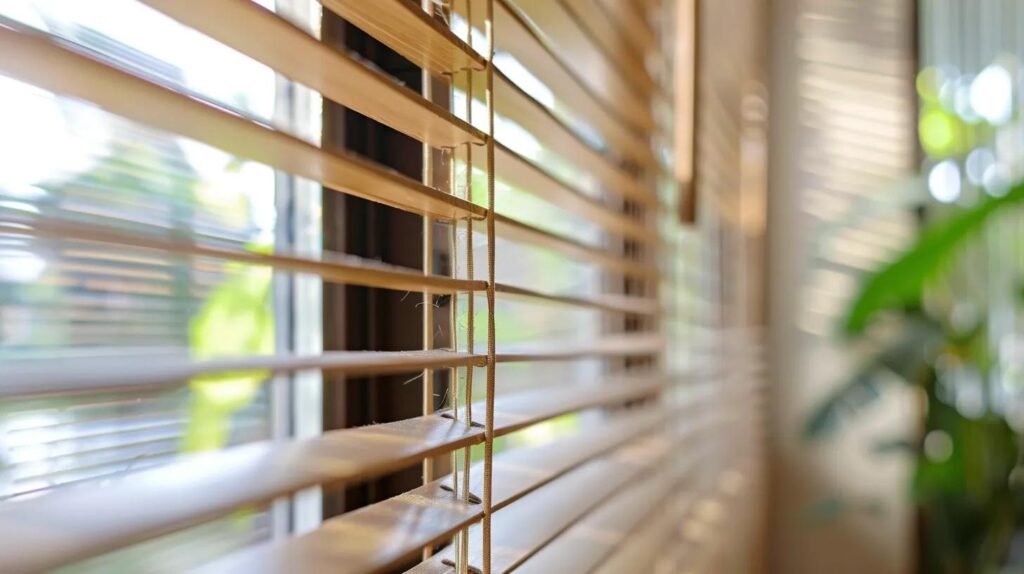
Why do faux wood blinds warp or turn yellow over time?
Warping usually comes from heat stress—repeated high heat on one side of the slat can slowly bend it out of shape. Yellowing is most commonly tied to UV exposure and aging (and sometimes to residue from smoke or harsh cleaners).
The practical takeaway: you don’t have to “baby” faux wood, but you do want to manage direct sun + trapped heat + cleaning chemistry.
Which windows are most likely to cause warping?
The highest-risk setups are windows that create a “heat trap,” such as intense afternoon sun on the glass, blinds mounted very close to the pane, or heat sources nearby.
Common risk situations:
- Big, sunny windows that get strong afternoon sun
- Windows with storm windows that reduce airflow near the glass
- Blinds installed very close to the glass where heat can build up
- Heat sources below or near the window (baseboard heat, vents, radiators)
If you’re dealing with a wide, sun-heavy opening, you may also want to revisit the best large-window options.
How can you prevent heat-related warping without changing blinds?
Start with airflow and heat management. The goal is to reduce how long the slats sit in a “hot pocket.”
Here are practical prevention moves that work in most homes:
- Avoid trapping heat against the glass. If the window is roasting in the afternoon, tilt the slats slightly open so air can circulate.
- Keep vents clear. Don’t let furniture block a heating vent that blasts hot air at the blinds.
- Reduce peak heat at the glass. Window films can help reduce solar heat gain and UV exposure.
- Don’t force bent slats back. Forcing can crease or twist them; focus on preventing repeat heat stress instead.
What helps prevent yellowing from UV exposure?
The most effective prevention is reducing UV and prolonged direct sun exposure. UV light is a known driver of discoloration in many polymers, and older research on PVC shows discoloration under ultraviolet exposure and heat.
If you have bright south/west exposure and you want white faux wood to stay crisp, these moves typically help:
- Use UV-reducing window film or other UV-control strategies (especially on the worst windows)
- Tilt slats to redirect direct sunlight during peak hours
- Keep a light dust routine so “film” doesn’t bake onto the surface
Which cleaning habits keep faux wood from discoloring?
A gentle routine matters more than “strong cleaners.” Dust and residue can make blinds look dingy, but harsh chemicals can do more harm than good—especially if they leave a reactive film.
Quick prevention cleaning checklist
- Dust weekly with a microfiber cloth or duster
- For wipe-downs, use mild soap and water on a lightly damp cloth
- Dry the slats afterward so residue doesn’t streak
- Avoid abrasive scrubbers (they can dull the finish)
- Avoid frequent bleach-based cleaning unless the product instructions explicitly allow it
- In kitchens, clean small grease spots early so they don’t bake on
(If you want a full “how to clean without damage” guide.
Decision table: what’s causing the problem—and the best prevention move
Use this table to pinpoint the most likely cause and make the smallest change that produces the biggest improvement.
| What you notice | Most likely cause | Prevention move that helps most | Best place to use it |
| Slats slowly bend or twist on one window | Repeated direct heat on the same side | Tilt slightly open during peak sun; improve airflow | West/south-facing windows |
| Warping shows up near the bottom | Heat source below (vent/baseboard/radiator) | Redirect/clear the heat source; add spacing/airflow | Windows above heaters |
| Whites look creamier over time | UV exposure + surface aging | Add UV-reducing window film; rotate tilt habits | Sunny rooms, bright exposures |
| Yellowing is blotchy or patchy | Residue from smoke/grease/cleaners | Gentle wipe-down routine; avoid harsh chemicals | Kitchens, smoking environments |
| Finish looks dull or chalky | Abrasion or chemical film | Stop abrasive scrubbing; switch to mild soap | High-touch windows |
| Only one room has problems | Room conditions (humidity/heat) differ | Ventilate and reduce trapped moisture/heat | Baths, laundry rooms, sunrooms |
What does this look like in real homes?
Mini-scenario 1: A sunny living room window with “wavy” slats
A homeowner notices the slats on one large window look slightly bowed, while the rest of the house looks fine. That window gets strong late-afternoon sun. Instead of replacing everything, they start tilting the blinds slightly open during peak heat to reduce the “heat trap,” and they add a UV/heat-reducing window film to that one window. The blinds stop getting worse, and the room stays bright.
Mini-scenario 2: A bathroom window where blinds look dingy faster
A family’s bathroom blinds don’t warp, but they start looking off-white and streaky. The issue isn’t sun—it’s steam + frequent wipe-downs with strong cleaners. They switch to a mild soap wipe and a quick dry afterward, and they run the exhaust fan longer after showers to keep moisture down.
Moisture control and ventilation reduce problems in humid spaces; EPA notes that moisture control is key.
Common mistakes and red flags
- Leaving blinds fully closed against hot glass for hours in strong sun (the “heat trap” problem)
- Cleaning with harsh chemicals frequently, then wondering why whites look dull or blotchy
- Scrubbing with abrasive pads that scratch or haze the finish
- Blaming the blind when the real issue is a nearby heat source blasting hot air
- Trying to “bend” warped slats back aggressively (it often makes twisting worse)
FAQs
Are faux wood blinds supposed to warp in bathrooms?
They’re generally chosen for moisture-prone rooms, but any blind can struggle if the room stays damp and hot for long periods. Ventilation and moisture control habits matter.
Do white faux wood blinds always turn yellow?
Not necessarily. Yellowing risk depends on UV exposure, heat, and cleaning habits. Reducing UV and avoiding harsh cleaners usually helps keep whites looking more consistent.
When should I replace instead of trying to prevent?
If slats are severely bent, the blind won’t close evenly for privacy, or the finish looks permanently uneven, replacement can be the simplest path—especially on one or two problem windows.
Next step
If you want faux wood blinds that fit cleanly, look consistent, and are matched to the conditions in each room, explore custom faux wood options here.
And when you’re ready to compare all blind types and get guidance for your home, start here.