
Measuring a sliding glass door for vertical blinds is simpler than it looks, but small mistakes can turn into daily annoyances—like vanes dragging on the floor or the stack blocking your main walkway. This guide walks you through the measurements you actually need (width, height, and opening/stack direction) so you can order vertical blinds that fit cleanly and work with how you use the door.
If you’d rather have your opening professionally measured and matched to the right option, start here.
What measurements do you need for vertical blinds on a sliding door?
You need three things: width, height (drop), and your opening/stack direction (where the vanes gather when open). Width and height determine fit; stack direction determines whether the door feels effortless or mildly annoying every day.
For vertical-blind options designed for sliding doors and wide openings.
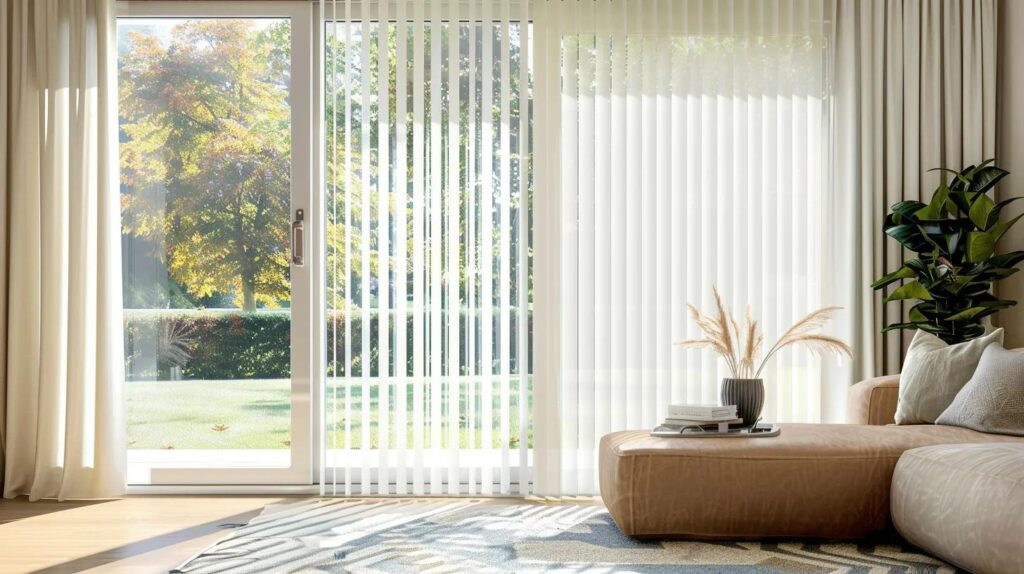
Should you use inside mount, outside mount, or ceiling mount on a sliding door?
Most sliding doors work with more than one mount style, but the “best” choice is the one that gives you solid coverage without interfering with the door handle, trim, or walkway.
A practical way to choose: if the door area has a clean mounting surface above the opening, ceiling or outside mount often gives more flexibility. If you have a deep, clean recess that won’t interfere with movement, inside mount can look tidy.
How do you measure the width for vertical blinds on a sliding door?
Measure width at the top of where the track will be installed—not at the middle of the glass. If you’re measuring inside a recess, measure the inside width in three places (top, middle, bottom) and keep the smallest number.
If you’re measuring for an outside/ceiling mount, measure the full area you want covered and plan an overlap beyond the opening so you’re not staring at bright edge lines.
How do you measure the height (drop) for a sliding door?
Measure from the planned track location straight down to the floor (or to the point you want the vanes to end). Take the height in three places and use the shortest measurement so the vanes don’t drag.
If your sliding door has a track or uneven flooring, measuring three heights is especially important—the door area can vary more than standard windows.
How do you choose stack side and opening style so the door stays usable?
Choose the stack so it stays out of your most-used path. The easiest rule is: match the opening direction to how the door operates and how you walk through it.
Common options:
- Left stack: vanes gather to the left
- Right stack: vanes gather to the right
- Split stack / center opening: vanes split to both sides
If you’re deciding whether vertical blinds are the right sliding-door solution in the first place, this guide helps.
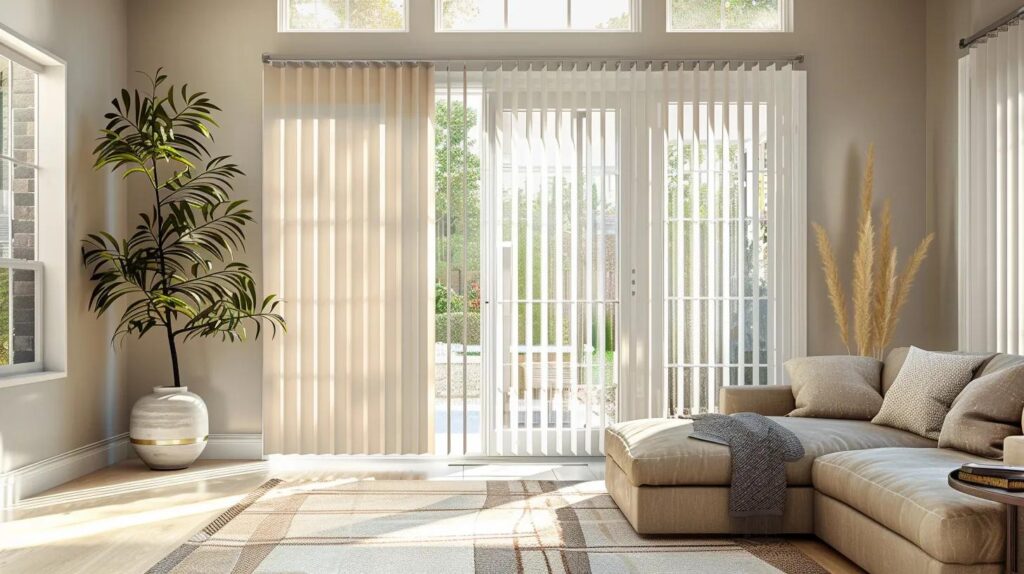
Decision table: the right measurement approach by mount and door setup
Use this table to keep your measurements aligned with how the blinds will actually be installed.
| Your setup | Width measurement | Height measurement | Ordering notes |
| Inside mount (recess) | Measure inside width 3x; use the smallest | Measure inside height/drop 3x; use the shortest | Confirm depth/clearance so vanes don’t hit the door/handle |
| Outside mount (on trim/wall) | Measure opening/trim width + planned overlap | Measure from planned headrail location to floor | Plan overlap for better edge coverage; confirm mounting surface is solid |
| Ceiling mount (above door) | Measure the coverage width you want under the ceiling | Measure from ceiling mount point to floor | Great for wide spans; make sure stack won’t block the main walkway |
| Uneven opening / older trim | Measure 3 widths; plan coverage for the “worst” spot | Measure 3 heights; use the shortest | Outside/ceiling mount often hides uneven openings better |
| High-traffic patio door | Choose width that keeps access clear when open | Choose height that won’t drag in the traffic path | Stack direction matters as much as the measurements |
Quick checklist: what to confirm before you finalize measurements
- You measured width and height in three places
- You wrote measurements as W × H and labeled the room/door
- You chose your mount style (inside, outside, ceiling) and measured to that surface
- You checked for obstacles (handles, locks, trim, floor track)
- You decided stack direction based on how you use the door daily
- You double-checked the “shortest height” so vanes won’t drag
What this looks like in real homes
Mini-scenario 1: Right-opening slider with the couch near the door
A homeowner has a sliding door that opens to the right and a couch on the left side of the opening. They choose a right stack so the vanes gather on the same side as the door’s opening and don’t pile into the seating area. They measure height to the floor in three places and use the shortest measurement so nothing drags where people walk.
Mini-scenario 2: Older patio door with uneven trim and bright edge light
A family measures inside the recess and finds the width varies top to bottom. They switch to an outside/ceiling-style plan so the treatment can overlap the opening and look cleaner. The key win is that they don’t fight a slightly crooked opening—and the door looks more “squared up.”
Common mistakes and red flags
- Measuring the glass instead of the mounting surface (the track mounts to trim/wall/ceiling)
- Using only one height measurement (then the vanes drag where the floor is slightly higher)
- Choosing a stack direction without thinking about your main walkway
- Forgetting the door handle/lock clearance (the vanes can hit hardware)
- Ordering a coverage width that blocks the door opening when the blinds are stacked
FAQs
Should vertical blinds touch the floor?
They’re usually designed to hang close to the floor without dragging. The safest way to avoid dragging is using the shortest height measurement and following the product’s ordering guidance.
What if my door opening isn’t perfectly square?
Measure width and height in three places and use the smallest width and shortest height. If the opening is noticeably uneven, an outside or ceiling mount can often look cleaner.
Can I measure now even if I haven’t decided on the stack?
Yes—measure width and height first. Stack direction is a separate “ordering choice” based on how you use the door.
Next step
If you want vertical blinds that are measured to fit correctly, aligned cleanly, and planned around your door access, start here at Better Blinds Plus.