
Vertical blinds are one of the most common ways to cover sliding glass doors and other wide openings—but they’re not automatically the best choice for every home. This guide helps you decide whether vertical blinds fit your door, your daily traffic, and the look you want, plus what to consider if you’d rather go with a different sliding-door solution.
If you’re comparing multiple blind styles for your home (not just patio doors), start here at Better Blinds Plus.
Are vertical blinds a good fit for sliding glass doors?
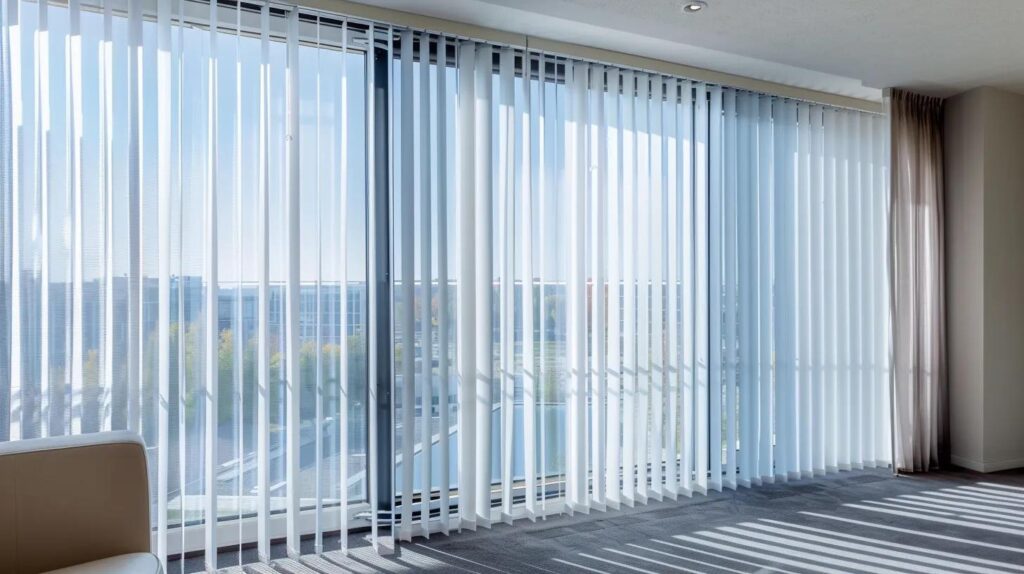
Yes—vertical blinds are often a strong fit for sliding glass doors because they’re designed for wide spans and move side-to-side, so you can walk through the door without lifting the entire treatment. They also let you rotate the vanes to manage privacy and daylight throughout the day.
They’re usually at their best when the opening is wide, used frequently, and you want a practical solution that stacks out of the way.
What are the biggest advantages of vertical blinds on patio doors?
The biggest benefits are easy access, flexible light control, and simple everyday maintenance. For many sliding doors, that combination is hard to beat.
Here’s what that looks like in real use:
- Walk-through access: You can slide the vanes open in the same direction the door operates.
- Adjustable privacy: Rotate vanes to reduce direct sightlines while still keeping daylight.
- Wide-opening coverage: Vertical blinds are built to cover large spans cleanly.
- Replaceable parts: Individual vanes can often be swapped if one gets damaged.
What are the downsides—and when should you skip vertical blinds?
Vertical blinds can be a miss when you’re prioritizing a softer, fabric-forward design look or when the door area is drafty and you’re sensitive to movement and noise. They’re also usually not the first choice if your goal is the strongest blackout-style performance.
You may want to consider another option if:
- You want a more decorative, layered look (instead of a structured blind)
- The area is breezy and you dislike any clatter or vane movement
- You’re trying to get the “most blackout” result at night
- You don’t have a good place for the vanes to stack when the door is open
Which vertical blind material should you choose: vinyl or fabric?
In most homes, vinyl is the practical choice and fabric is the softer-looking choice. The right pick depends on how hard the door gets used and how much you care about texture.
Vinyl vertical blinds
Vinyl is usually best when you want durability and easy wipe-clean maintenance—especially on doors that get used constantly.
Fabric vertical blinds
Fabric is usually best when you want a warmer, more finished look and you’d prefer a treatment that feels less “utility” and more like part of the decor.
If you want to see how Better Blinds Plus frames material and layout choices for wide openings, the vertical blinds category page is here: Vertical Blinds.
How do stack direction and opening style affect daily use?
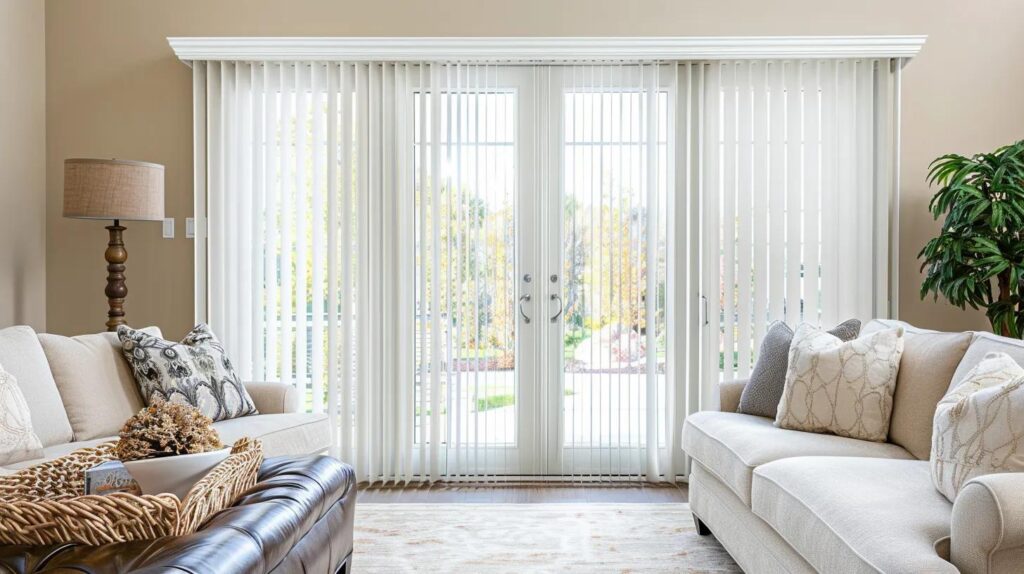
Stack direction matters because it determines where the vanes gather when the blinds are open—and that can either make your door feel effortless or mildly annoying every day. The best setup keeps the door you use most accessible and keeps the stack out of your main walkway.
Common layouts include:
- Left stack: vanes gather on the left
- Right stack: vanes gather on the right
- Split stack: vanes gather to both sides
- Center opening: vanes part from the middle
A simple way to choose: stand where you typically walk through the door and picture which side feels most natural for the stack.
How do vertical blinds compare to other sliding-door options?
If your top priorities are practical access and wide-span coverage, vertical blinds are often the simplest solution. If your top priority is a more modern, wide-panel look—or a softer decorative finish—another option may suit your space better.
Use this table to compare the most common sliding-door treatments.
| Factor | Vertical blinds | Panel track shades | Roller / solar shades | Drapery |
| Daily door traffic | Excellent (slides with the door) | Excellent (slides with the door) | Moderate (often needs to be raised for full access) | Excellent (slides with the door) |
| Light control | Strong (rotate vanes) | Moderate to strong (depends on fabric) | Strong for glare control; privacy depends on fabric | Strong when closed; less adjustable without layering |
| Privacy (day & night) | Strong, especially with more opaque vanes | Strong with the right fabric | Varies widely by fabric/openness | Strong when closed |
| Maintenance | Often simple; replace single vanes if needed | Fabric maintenance depends on material | Generally simple wipe/vacuum depending on fabric | Varies; fabric cleaning may be more involved |
| Visual style | Structured and practical | More modern, wide-panel look | Minimal, modern, low-profile | Soft, decorative, layered |
| Space when open | Needs a place to “stack” | Needs stack space; panels are wider | Rolls up; minimal stack | Needs side stack space |
Soft next step: if you’re not sure which direction to go, browsing the main blinds options first can help you narrow choices quickly.
Quick checklist: choosing a sliding-door blind you won’t regret
- Pick a side-to-side solution if the door is used frequently
- Decide what you want most: maximum practicality, a more modern panel look, or a softer fabric finish
- Think about where the treatment will stack when open (and whether it blocks your walkway)
- Match material to traffic: higher-traffic doors usually need more forgiving surfaces
- Consider how you use daylight: glare control vs bright-but-private vs “as dark as possible”
How does this decision play out in real rooms?
Mini-scenario 1: Busy family patio door used all day
A household uses the patio door constantly for pets and backyard access. They prioritize a treatment that slides out of the way quickly and doesn’t feel precious. Vertical blinds make sense because they match the door’s movement and can be set up to stack away from the main walkway.
Mini-scenario 2: Open-concept living area where style matters more
A homeowner wants a cleaner, more modern look on a large glass door that’s a focal point of the room. They like how vertical blinds function, but prefer the wide-panel appearance of panel track shades—or the softness of drapery—to better match the decor.
Common mistakes and red flags to watch for
- Choosing vertical blinds without planning stack direction (the “daily annoyance” problem)
- Picking a look you don’t actually like just because it’s common for patio doors
- Ignoring breezy conditions near doors that can move or clatter lighter vanes
- Expecting blinds alone to deliver perfect blackout (door fit and product design matter)
- Treating a high-traffic door like a low-traffic window (material choice matters more here)
Quick FAQs
Are vertical blinds only for sliding doors?
No. They’re also commonly used on large windows and wide openings where side-to-side operation is helpful.
Do vertical blinds provide privacy at night?
Yes, they can—especially with more opaque vanes. Privacy depends on the material and how well the treatment covers the opening.
Are vertical blinds a good fit for small windows?
Usually they’re better proportioned for larger windows and sliding doors. For small windows, another blind style often looks and feels more natural.
Next step
If you want help choosing the simplest, most practical blind setup for your sliding glass door (and ensuring everything fits cleanly), start with the main blinds category here.