
Vinyl and fabric vertical blinds can both work beautifully on wide windows and sliding doors, but they solve different problems. This guide compares them based on how they feel day-to-day—privacy, light control, noise, cleaning, and the “look” you want—so you can choose the material that fits your space. We’ll stay focused on the material choice (not measuring or installation steps).
If you want help choosing the right vertical blind option and getting it measured to fit, start here at Better Blinds Plus.
What’s the difference between vinyl and fabric vertical blinds?
The simplest difference is the surface and structure. Vinyl vanes are typically smooth and wipeable, which makes them feel more “practical.” Fabric vanes add texture and softness, which often makes them feel more “decorative” in living areas.
In real homes, the best choice usually comes down to your tolerance for maintenance, how design-forward the room is, and whether the opening gets used constantly.
Which material gives better privacy and light control?
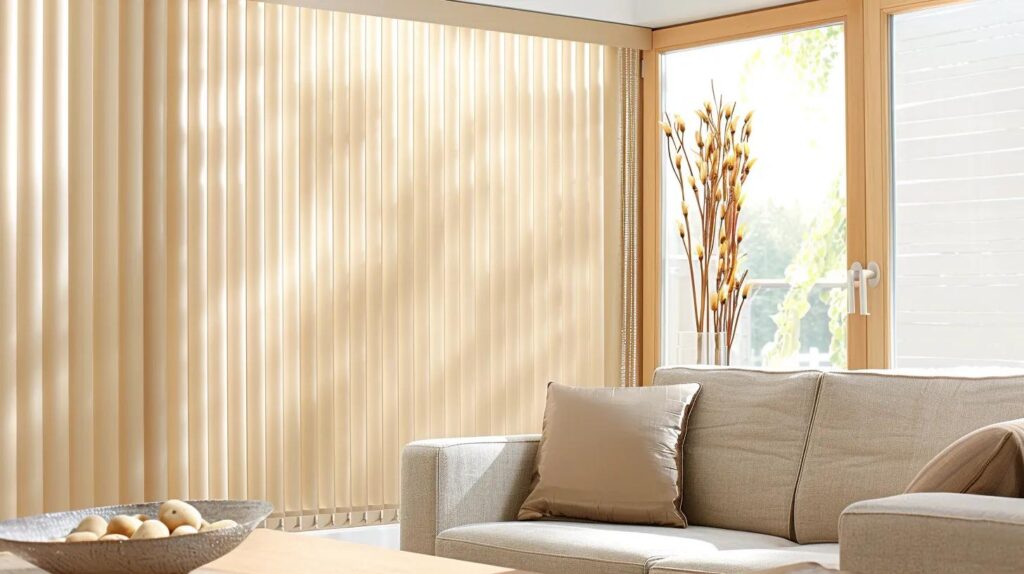
Both can provide strong privacy when closed, but they manage daylight differently. Vinyl tends to feel more direct and crisp (light in or light out). Fabric often feels softer because it can diffuse light depending on weave and opacity.
If your priority is a straightforward “close it and get privacy” feel, vinyl is often the simpler fit. If your priority is a gentler, more ambient light quality in the room, fabric can be the nicer daily experience.
Which is easier to clean in busy homes?
In most households, vinyl is easier to keep looking clean because it’s typically wipeable. Fabric can still be manageable, but it’s more likely to need vacuuming or spot-cleaning—especially near doors where hands and pets brush by.
A helpful test: if you expect to clean the treatment like you clean a backsplash (quick wipe), vinyl usually makes more sense. If you’re fine with light vacuuming and occasional spot-care, fabric stays in the running.
Which is quieter and better for breezy doorways?
If your patio door area gets drafts, fabric is often the quieter-feeling option because the material has more “give.” Vinyl can be totally fine, but in a breezy location you may notice more movement and occasional clatter if the vanes tap each other.
If quiet is a high priority, focus on a configuration that suits your doorway use (stack direction and how the opening is used daily), and then choose the material that feels best in that environment.
Which looks more modern in living spaces?
“Modern” can mean minimal or design-forward.
- If you want a clean, simple, low-fuss look, vinyl can feel very streamlined.
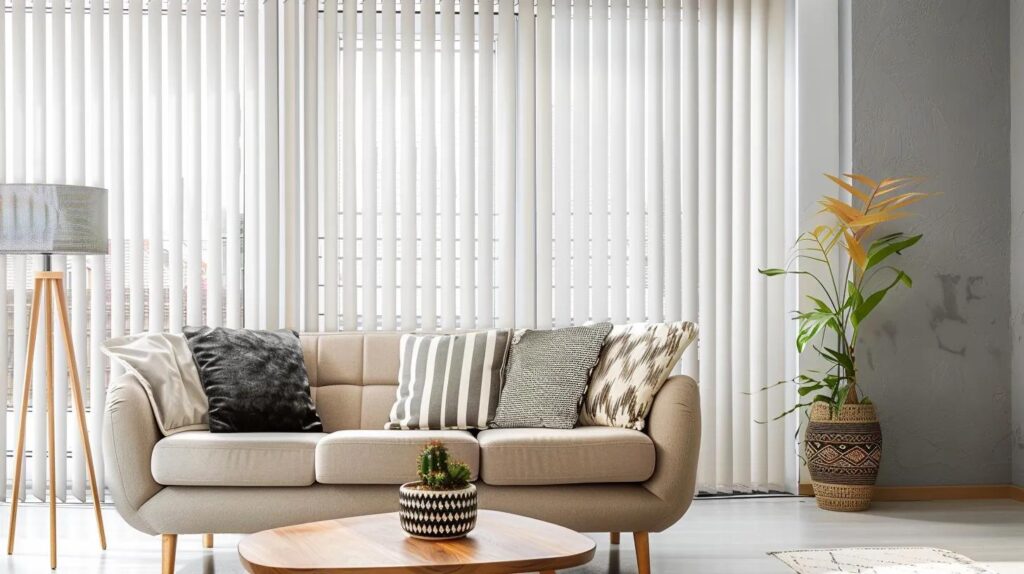
- If you want a more finished, softer look that blends with furniture and textiles, fabric often looks more elevated.
If the opening is a focal point in a living room, dining room, or home office, fabric can make the whole wall feel less utilitarian.
Decision table: vinyl vs fabric vertical blinds (choose by your priorities)
| Your priority | Vinyl vertical blinds tend to fit best when… | Fabric vertical blinds tend to fit best when… | Practical takeaway |
| Easy wipe-clean upkeep | You want quick wipe-down maintenance | You’re okay vacuuming or spot-cleaning | Busy, high-touch doors often favor vinyl |
| Softer “finished” look | The room is minimal and you prefer uniform surfaces | You want texture and a less utilitarian feel | Living areas often favor fabric |
| Breezy / drafty doorway comfort | The area is calm and movement won’t bother you | You want quieter, softer movement | Drafty doors often favor fabric |
| Light quality in the room | You want more direct light control | You prefer a more diffused, softer daylight feel | Choose based on how you use daylight |
| High-traffic durability mindset | You expect frequent use and want low-stress maintenance | You want comfort + softness and will treat it a bit more gently | Traffic level often points the decision |
| Humidity-prone conditions nearby | You want the most forgiving maintenance routine | You can manage humidity and keep fabric from staying damp | Managing moisture matters for any material |
Quick checklist: pick the right material in under two minutes
- Is this opening used constantly (pets/kids/backyard access)?
- Do you want “wipeable and simple,” or “soft and design-friendly”?
- Will drafts or airflow near the door annoy you?
- Do you want crisp light control, or softer filtered daylight?
- Is this a focal-point space (living room/dining/home office) or a utility/traffic zone?
If you want to see vertical blind material options and get help narrowing down what fits your room and traffic level, browse our better Blinds Plus Vertical Blinds page.
What this looks like in real homes
Mini-scenario 1: The patio door that gets used all day
A family uses the sliding door constantly for the dog, grilling, and backyard access. They choose vinyl because they want a simple surface they can wipe down without thinking twice. The “win” isn’t fancy—it’s that the blinds still look tidy after real daily traffic.
Mini-scenario 2: The living room door that’s a design focal point
A homeowner has a large glass door in an open-concept living room. The door is used regularly, but the bigger goal is a softer, more finished look that blends with furniture and textiles. They choose fabric because it feels less utilitarian and makes the whole wall look more intentional.
Common mistakes and red flags to watch for
- Choosing fabric for a high-traffic door, then getting frustrated when it needs more care than expected
- Choosing vinyl for a breezy doorway, then being annoyed by movement or noise (when a softer material would feel calmer)
- Making the decision purely on “what’s common” instead of how the opening is used daily
- Ignoring moisture habits in the space—if the area stays humid, controlling moisture helps every finish last longer
EPA guidance emphasizes that moisture control (including ventilation and drying damp areas promptly) is key to preventing mold problems in homes.
FAQs
Is vinyl or fabric better for a rental or a busy household?
In many rentals and high-traffic homes, vinyl is often the more forgiving choice because it’s typically simpler to wipe clean. The best choice still depends on your door traffic and whether drafts are a factor.
Can fabric vertical blinds still give strong privacy?
Yes. Privacy depends on the material’s opacity and how well the treatment covers the opening. Fabric can provide strong privacy while also softening the look.
If I’m unsure, what’s the simplest way to decide?
Decide whether your top priority is low-maintenance wipeability (vinyl) or a softer, more finished look and feel (fabric). Then check whether drafts near the door push you toward a quieter, softer material.
Next step
If you want help choosing the right vertical blind material and layout for your opening—and getting it custom-fit—start here at our Blinds Page.