
If light sneaks in around the sides of your blinds, you’re not alone—especially with inside-mounted blinds that need a little clearance to operate. The good news is you can usually reduce light gaps with a few targeted adjustments or add-ons, without starting your whole window project over. This guide focuses on practical fixes that improve privacy and light control while keeping your current blinds in place.
If you’re considering a new set of blinds for better coverage and fit, the main category is here.
Why do blinds have light gaps at the sides?
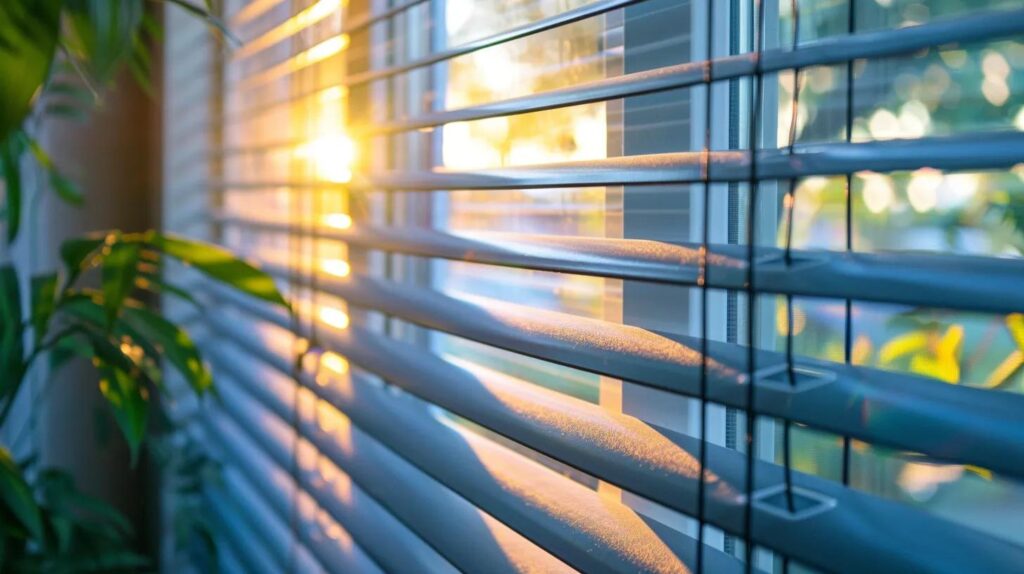
Most light gaps happen because blinds need space to move. Inside-mounted blinds are typically made slightly smaller than the opening so the slats and headrail don’t rub the frame when you raise, lower, or tilt.
A second common cause is simple alignment: if the blind is slightly off-center or the brackets aren’t level, the gap can look bigger on one side—even when the blind “fits.”
Is it a light gap or an air leak?
If you only see light but don’t feel airflow, it’s usually a coverage gap (a blinds fit issue). If you feel a draft, that’s a window air leak—and the fix is different.
For drafts, the U.S. Department of Energy recommends sealing leaks around windows with caulk and weatherstripping.

What’s the fastest fix you can try right now?
The fastest improvement is usually re-centering and re-leveling the blind so the gap is even and as small as your setup allows. This won’t “blackout” a window, but it often reduces the most annoying side glow.
Quick diagnostic checklist (5 minutes)
- Make sure the blind is fully lowered and the slats are fully closed
- Check whether the blind looks centered in the opening (equal gap left/right)
- Look for one side higher than the other (tilt the bottom rail level)
- Confirm brackets haven’t shifted or loosened (even a small shift shows up as a bigger gap)
- If the gap is much larger at the top than the bottom (or vice versa), the opening may be out of square
If your gap is clearly “one-sided,” alignment fixes often give you the quickest win.
Which solutions reduce side light gaps the most (without replacing blinds)?
If you want a meaningful reduction without buying new blinds, you’ll usually choose between blocking the gap or layering the window.
Blocking the gap means adding a simple barrier along the sides of the opening so light doesn’t pass through the clearance space. Layering means adding side coverage (like stationary panels) so the light leak becomes irrelevant.
Decision table: pick the best light-gap fix by situation
| Your situation | Best “no-replace” solution | Why it works | Tradeoff to expect |
| Gap is uneven (worse on one side) | Re-center + level the blind | Reduces the most noticeable “lopsided” glow | Won’t eliminate normal clearance gaps |
| You want darker edges at night | Light-gap blocker strips on the frame | Physically blocks light from the sides | Adds a visible strip; needs neat install |
| You need better privacy from neighbors | Add a side layer (stationary panels) | Covers edge glow and improves privacy feel | Adds fabric/visual weight to the window |
| You’re okay upgrading only one problem window | Switch that window to an outside-mount setup | Adds overlap beyond the opening for better coverage | Changes the look; may require a new blind size |
| Doorway or wide opening has edge glow | Consider a side-to-side treatment plan | Better coverage across a wide span | Layout/stack planning matters |
If you’re considering outside mount primarily to reduce edge gaps, this guide helps you decide.
How do light-gap blocker strips work (and when are they worth it)?
Light-gap blockers are simple strips that mount to the window frame (or nearby surface) to “cover” the clearance space where light sneaks through. They’re especially popular when you like your existing blinds but want less side glow at night.
They tend to be worth it when your top frustration is the bright edge lines, not the blinds themselves. If your blinds are already hard to operate or don’t close evenly, a blocker strip may feel like a band-aid.
When does switching to outside mount make the biggest difference?
Outside mount usually makes the biggest difference when your goal is more coverage. Because the blind can overlap the opening, you typically see fewer side gaps compared with an inside mount.
If you’re deciding whether that change is worth it, focus on two questions: do you mind a more “framed” look, and do you have enough wall/trim area to mount securely? The main blinds overview can help you compare options quickly.
What does this look like in real homes?
Mini-scenario 1: Bedroom with “bright edge lines” at night
A homeowner loves the look of their inside-mounted blinds, but the side glow bothers them at bedtime. They first level and re-center the blinds to make the gaps even, then add a simple light-gap blocking strip to the frame for a stronger improvement. The result isn’t “movie-theater dark,” but the harsh edge lines are dramatically reduced.
Mini-scenario 2: Street-facing office where privacy matters during the day
A remote worker gets distracted by movement outside and feels exposed in the afternoon. Instead of replacing the blinds, they add stationary side panels that stay mostly open but cover the edges, making the room feel more private while still allowing daylight. They keep using slat tilt for glare control and use the panels as “privacy insurance.”
The U.S. Department of Energy notes that louvered blinds can reduce glare and provide good daylight control, which is often part of a “keep it bright” plan.
Common mistakes and red flags
- Expecting inside-mounted blinds to have zero edge glow (clearance is often part of smooth operation)
- Over-focusing on the blinds when the real issue is a drafty window (air leaks need sealing)
- Installing blocker strips crooked or uneven (it can make the window look off even if it blocks light)
- Choosing an outside mount without considering the visual change and mounting surface
- Treating a light-gap fix like a blackout solution (blinds can reduce light, but “total darkness” often needs a different approach or layering)
FAQs
Are light gaps normal with inside mount blinds?
They’re common, because inside mounts typically need clearance to move smoothly. The best “no-replace” improvements are centering/leveling and adding a side-blocking solution.
Will outside mount eliminate light gaps completely?
Outside mount usually reduces side gaps because it overlaps the opening, but you may still see a softer glow depending on the room, window shape, and how the treatment fits.
What if the gap is bigger at the top than the bottom?
That often points to an opening that’s out of square or a blind that isn’t level. Re-leveling the blind can help, and outside mount can sometimes “hide” uneven openings better.
Next step
If you want a cleaner fit and better coverage—without guessing which option will actually solve your light-gap problem—start here and compare blinds that match your goals.