
Renters usually want three things at once: privacy, light control, and a setup that won’t turn move-out day into a patch-and-paint project. This guide helps you choose renter-friendly blinds and installs based on what landlords typically allow and what actually holds up to day-to-day living. We’ll stay focused on practical, low-damage choices—not on lease law or price quotes.
If you’re exploring new blinds overall (not just rental-friendly setups), Visit for Blinds at Better Blinds Plus.
What does “renter-friendly blinds” really mean?
Renter-friendly blinds are window coverings you can install, use, and remove with minimal damage and minimal hassle. In practice, that usually means one (or more) of these:
- No-drill mounting that uses tension, clips, or adhesive designed for removability
- Inside-the-frame installs that limit wall holes (when allowed)
- Lightweight, easy-to-remove products that don’t require complicated hardware
The goal isn’t perfection—it’s getting a setup that looks intentional while staying move-out friendly.

Which install styles avoid holes (and which ones still leave marks)?
The most renter-friendly installs are the ones that don’t require drilling into drywall or trim. Some “no drill” methods are truly temporary; others still leave small marks or adhesive residue if you remove them carelessly.
Here’s the simple breakdown:
- Tension/clip-in systems: Often the cleanest for rentals because they don’t rely on adhesive or screws.
- Peel-and-stick temporary shades: Great for quick privacy, but removal quality depends on the surface and how long they’ve been up.
- Adhesive bracket systems: Can work well, but they’re only as good as the surface prep and the adhesive rating.
If your lease allows small holes in the window frame but not the walls, a traditional inside-mount blind may still be okay—but that’s a “read your lease first” situation.
Which blind materials survive rental life best?
In rentals, durability is usually about wipeability, resistance to dents, and how forgiving the finish is when people touch the blinds constantly.
For many renters, faux wood blinds are a practical sweet spot because they’re easy to clean and don’t demand delicate care in busy rooms. If you’re considering a durable wood-look option, start here for Faux wood blinds at Better Blind Plus.
If your rental has a wide patio door or large opening, a side-to-side solution is often more practical than a heavy lift system. Vertical blinds are one common solution for wide spans.
How do you get privacy and light control without permanent hardware?
You can get solid privacy in a rental by choosing a blind style that lets you tilt for privacy instead of relying on heavy “all-or-nothing” coverage.
In real life, the most usable approach is:
- Tilt during the day (light stays bright, sightlines are reduced)
- Close more fully at night (privacy becomes the priority)
If you need “darker edges” in a bedroom, you may still see small side gaps with inside-mounted blinds. In that case, layering (a simple curtain panel on a tension rod) can solve the problem without replacing the blinds.
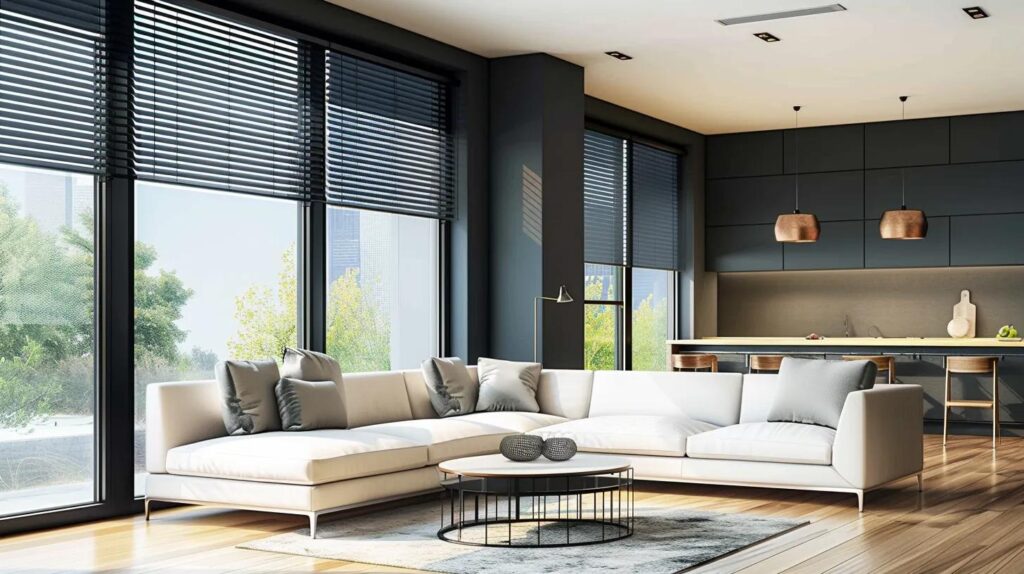
Decision table: renter-friendly blind setups by real-world situation
Use this table to match your window and your lease constraints to a setup that’s likely to work.
| Rental situation | Best renter-friendly option (often) | Why it works | What to watch for |
| No holes allowed (strict lease) | Tension/clip-in systems or true no-drill shades | Minimal or no permanent marks | Verify your window frame can accept the fit method |
| You need fast privacy ASAP | Temporary peel-and-stick shades | Quick, low-effort coverage | Adhesive removal depends on surface + time |
| High-touch room (kitchen, entry, kids) | Faux wood-style blinds | Wipeable, forgiving maintenance | Heavier blinds may feel harder on tall windows |
| Sliding door / wide opening | Vertical blinds (or another side-to-side solution) | Easy walk-through access; wide-span coverage | Plan stack direction so it doesn’t block your walkway |
| Bedroom that needs “less side glow” | Blinds + removable side layer (tension-rod curtains) | Better edge coverage without new blinds | Adds a bit more visual weight |
| You’re moving again soon | Simple temporary solution first | Easy to remove and reuse | Don’t over-invest in a short-term setup |
A 10-minute renter checklist before you buy anything
- Check your lease for rules on holes in walls vs window frames
- Identify “problem windows” (street-facing privacy, glare, bedroom side gaps)
- Note wide openings (patio doors) that may need side-to-side operation
- Decide what you’ll actually do daily: mostly tilt or mostly raise/lower?
- Choose materials you’ll clean realistically (wipeable beats delicate)
- Think about move-out: can you remove it without repairs?
If you have young children in the home, the U.S. CPSC recommends cordless window coverings as the safest option to eliminate strangulation hazards.
Two rental examples that make the tradeoffs clearer
Mini-scenario 1: Street-facing living room with a strict “no holes” lease
A renter needs daytime privacy but still wants the room bright. They choose a no-drill setup that fits inside the frame, then use slat tilt to keep daylight while reducing direct sightlines. Their “win” is that the window feels private without turning the room dark—and without creating wall repairs at move-out.
Mini-scenario 2: Patio door that gets used constantly
A renter uses the sliding door for pets and daily traffic. A heavy lift-style blind would be annoying, so they choose a side-to-side solution and plan the stack direction away from the main walkway. The door stays easy to use, and the covering doesn’t become a daily frustration.
Soft next step: if you want help matching the right blind type to each room (and avoiding renter regrets), browse the main category here.
Renter red flags that usually end in replacement
- Choosing something “cheap and temporary” that looks messy—and then avoiding it every day
- Using adhesive mounts on dusty or textured surfaces (they fail early or leave residue)
- Picking a heavy blind for a tall window and realizing it’s annoying to lift
- Ignoring how the treatment stacks on a patio door (it blocks the walkway)
- Treating blinds as a draft fix (if you feel airflow, it’s often a window sealing issue)
For draft reduction basics, U.S. Department of Energy guidance on weatherstripping is a solid starting point.
FAQs
Can renters install blinds without drilling?
Often, yes—many systems use tension, clips, or adhesive. The best approach depends on your window frame type and what your lease allows.
What’s the easiest renter-friendly option for instant privacy?
Temporary shades can be the fastest. If you want something that feels more “finished,” a renter-friendly blind system with tilt control usually feels better long-term.
Should renters choose blinds or curtains?
Many renters do both: blinds for everyday light control and a simple curtain layer (often on a tension rod) for extra privacy or light gap coverage.
Next step
If you want renter-friendly blinds that look clean, function well, and can be measured to fit correctly, start here at Better Blinds Plus.