
Kitchen windows put blinds through more than most rooms: steam from cooking, grease in the air, and splash zones near sinks. This guide helps you choose kitchen-friendly blinds that stay easy to clean and keep looking good over time. We’ll stay focused on blinds (not curtains or shades), and on practical fit for real kitchens.
If you want help selecting the right blinds across multiple rooms (and getting everything measured to fit), start here at Better Blinds Plus.
What makes kitchen windows harder on blinds?
Kitchen blinds need to handle a mix of moisture + residue. Steam can linger after cooking, and grease can settle on slats over time—especially near stoves and food prep areas. Near the sink, occasional splashes and frequent wipe-downs are the real test.
A “kitchen-proof” blind is one that stays stable, doesn’t demand delicate cleaning, and still gives you flexible light and privacy.
Which blind materials handle steam, grease, and splashes best?
In most kitchens, the best-performing blinds are made from moisture-tolerant, wipeable materials. The goal isn’t perfection—it’s choosing a material that won’t punish you for normal kitchen life.
For many kitchens, that means starting with faux wood, then considering aluminum or vinyl depending on your window location and how you use the room.
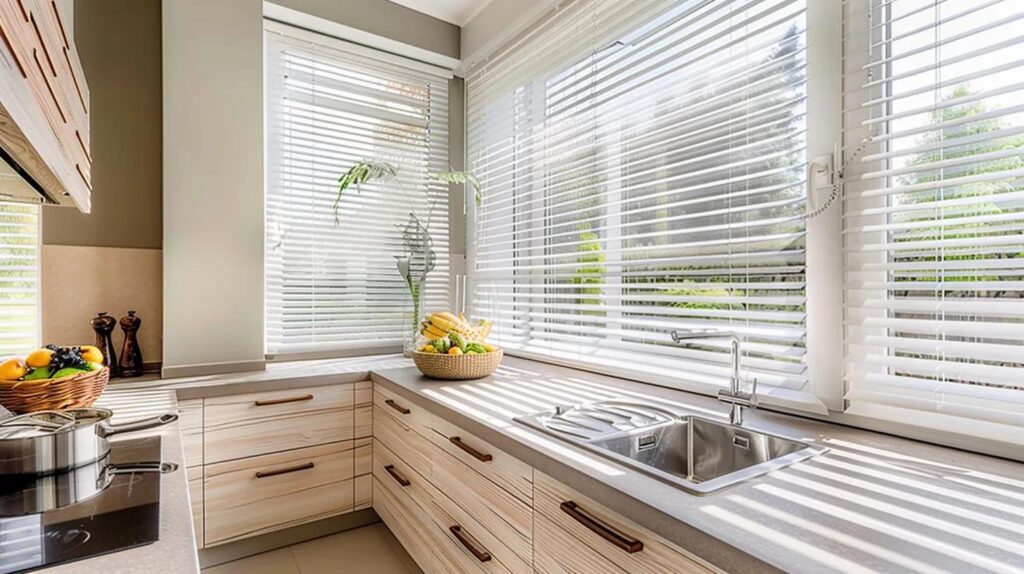
Are faux wood blinds a good choice for kitchens?
Yes—faux wood blinds are often the strongest all-around kitchen pick if you want a warmer look without stressing about steam and cleaning. They’re typically easier to wipe down than real wood and tend to be a better match for windows near sinks or high humidity.
If you like the wood-blind look in a kitchen, faux wood is usually the first material to evaluate.
When do aluminum or vinyl blinds make more sense?
Aluminum or vinyl blinds can be a smart fit when you want a simpler, lightweight option—especially for small windows or spaces where function matters more than a “wood” aesthetic.
Aluminum can feel sleek and easy to operate day-to-day, while vinyl can be a straightforward choice for moisture-prone spots. If your kitchen window is directly in the “splash zone,” prioritizing a wipeable, non-porous surface usually pays off.
What are the best blinds for different kitchen window situations?
Here’s a practical decision table that matches common kitchen setups to blind types—without turning into a whole-house buying guide.
| Kitchen window situation | Best blind choice (usually) | Why it works | Watch-outs |
| Over the sink | Faux wood or aluminum | Handles splashes; easy wipe-down | Make sure controls clear the faucet/backsplash |
| Near the stove/cooktop | Faux wood or aluminum | Tolerates heat/steam better than delicate materials | Plan for more frequent cleaning due to grease |
| Breakfast nook / away from prep | Faux wood (often) | Balanced look + easy maintenance | If you rarely cook, you may have more flexibility |
| Small window over counter | Aluminum or vinyl | Lightweight and simple | Can show spots if cleaning is inconsistent |
| Big window that you raise/lower daily | Faux wood (planned well) or lighter options | Strong light control; classic look | Weight and lift effort can matter on tall/wide blinds |
| Street-facing kitchen | Faux wood (often) | Great privacy control with tilting slats | Consider mount choice if side gaps bother you |
If you want a second opinion based on your exact window locations (sink/stove/prep areas), Better Blinds Plus can help you pick the right blind for each window.
How do you keep kitchen blinds easy to clean?
The easiest kitchens to maintain aren’t the ones that never get messy—they’re the ones with a simple routine. Light, regular cleaning prevents grease film from building up so you don’t end up with a “deep clean day” later.
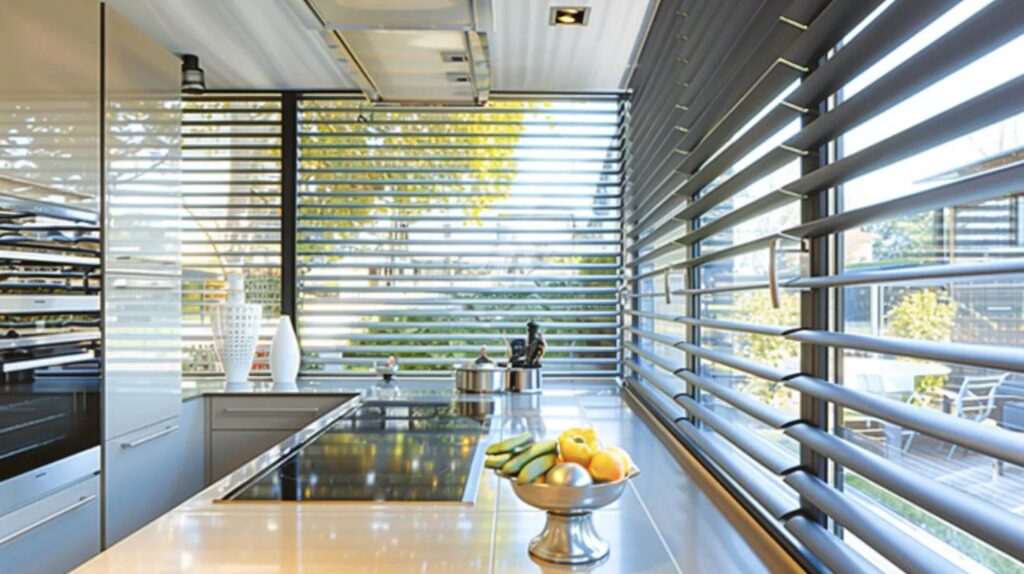
Kitchen blind cleaning checklist (low-effort routine)
- Dust slats weekly with a microfiber duster (quick pass, top to bottom)
- Spot-clean splashes quickly (don’t let them dry into a sticky patch)
- Use a lightly damp cloth for wipeable materials, then dry the slats
- Avoid spraying cleaner directly onto blinds (spray onto the cloth instead)
- If you cook often, do a monthly “tilt + wipe” on the side facing the stove
Kitchen ventilation helps reduce lingering moisture and particles in the air—especially while cooking. EPA guidance notes that ventilation helps remove or dilute indoor pollutants from indoor sources.
What does this look like in real kitchens?
Mini-scenario 1: The sink window that gets constant splashes
A family has a window directly behind the sink. They pick a blind material they can wipe down quickly, because they know it will get splashed and cleaned often. Their “win” is that the blinds still look good after months of normal use—not that they look perfect on day one.
Mini-scenario 2: The bright kitchen that needs daytime privacy
A homeowner loves natural light but their kitchen faces a neighbor. They choose blinds for the ability to tilt slats upward and keep daylight while reducing direct sightlines. They don’t need total darkness—just flexible privacy that doesn’t feel heavy.
Common mistakes and red flags when choosing kitchen blinds
- Choosing a material that looks great but feels fragile to clean near a sink or prep area
- Underestimating grease buildup near the stove (then blaming the blinds later)
- Picking a blind that interferes with faucet handles, window cranks, or countertop items
- Assuming one “perfect” material must be used for every window (kitchens often have different zones)
- Skipping ventilation habits—if steam lingers daily, everything in the kitchen ages faster over time
EPA notes that inadequate ventilation can increase indoor pollutant levels and that high temperature and humidity can increase concentrations of some pollutants. Check a guide to indoor air quality.
Quick FAQs about blinds for kitchens
Are real wood blinds a good idea in a kitchen?
They can work in lower-humidity kitchens where the window is away from the sink and heavy steam, but many homeowners prefer faux wood in kitchens because it’s generally easier to maintain around moisture and cleaning.
What blinds work best over a kitchen sink?
Usually, you want something wipeable and moisture-tolerant. Faux wood and aluminum are common “sink window” picks because they handle splashes and quick cleaning well.
How do I reduce side light gaps for a street-facing kitchen?
If side gaps bother you, an outside mount can improve edge coverage. If you’re deciding between mounts, this guide covers that decision.
Next step: choose blinds that fit your kitchen’s real-life zones
If you want blinds that stay easy to clean and fit correctly around sinks, counters, and hardware, start with the full blinds options here (and get help matching the right choice to each window.