
Glare is one of those problems that makes a room feel “off” even when everything else looks great—your monitor gets washed out, your TV reflects the window, and you end up closing the blinds completely. This guide helps you choose blinds that reduce glare while still keeping the room bright and livable. We’ll focus on practical blind choices and how to match them to your window direction and daily habits.
If you want help selecting blinds across multiple rooms (and getting everything measured to fit), start here at Better blinds plus.
What kind of glare are you dealing with: screen glare or window glare?
Most glare problems fall into two buckets: direct sun hitting the screen or bright window reflections bouncing onto the screen. Your best blind choice depends on which one you have.
A quick diagnostic:
- If glare changes dramatically when the sun moves, it’s usually direct sunlight.
- If the screen is readable but feels “washed,” it’s often overall brightness/reflection.
- If the glare is worst in the morning or late afternoon, your window likely faces east or west.
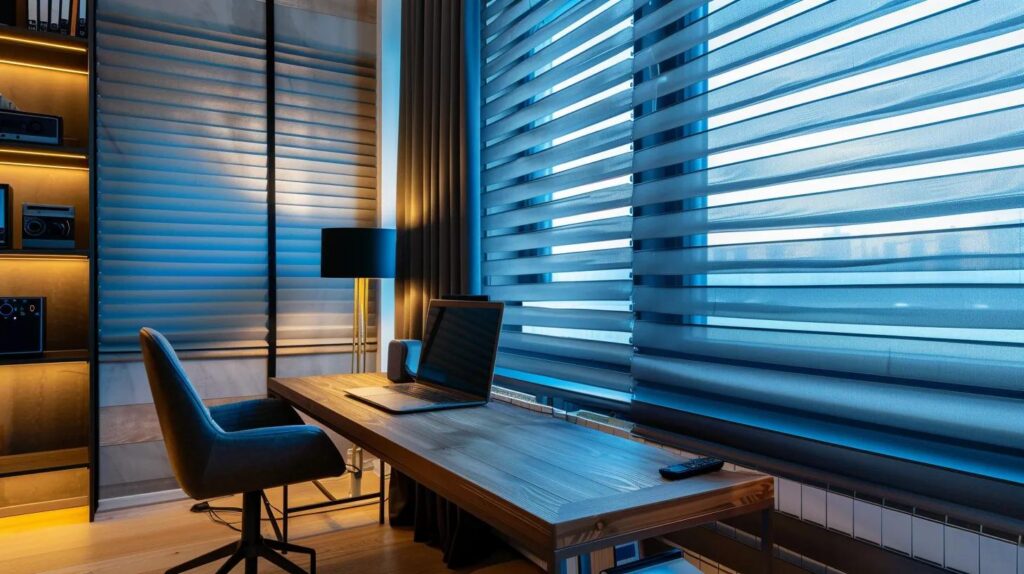
Which blinds reduce glare without turning the room into a cave?
For most home offices and TV rooms, adjustable slat blinds are the easiest way to reduce glare without killing daylight, because you can tilt the slats to redirect light instead of blocking it entirely.
A practical starting point:
- Horizontal slat blinds (like wood or faux wood) are great when you want precise tilt control.
- Vertical blinds can be especially useful on wide openings and can work well when sunlight comes from an east/west direction.
Explore vertical blind options for wide windows and patio doors.
How do you use slat angle to cut glare but keep daylight?
The fastest improvement usually comes from tilting, not lowering. Tilting lets you bounce light upward toward the ceiling (bright room, less glare) or downward to block direct sightlines.
A simple rule of thumb:
- If the sun is high and harsh, tilt slats so they aim light upward.
- If the glare is at eye level, tilt so slats block the direct line from window to screen.
Ergonomic guidance often recommends using window coverings to help reduce glare and positioning screens to avoid direct reflection.
Which blinds are best for a home office (glare control + comfortable daylight)?
In most home offices, you want two things at once: reduced screen glare and enough daylight to stay alert and comfortable.
For many offices, faux wood blinds hit a sweet spot: strong tilt control and a surface that’s easy to maintain in real life.
If your office window gets strong morning/afternoon sun, consider how your window faces and whether a vertical or horizontal slat approach fits better. OSHA notes vertical blinds can work well for east/west facing windows, while horizontal blinds can suit north/south orientations.
Which blinds are best for a TV room (daytime glare vs nighttime viewing)?
TV rooms are tricky because you’re managing two different uses:
- Daytime: reduce reflections on the screen without making the room gloomy.
- Nighttime: reduce distracting outside light while keeping the room comfortable.
Blinds can do a lot here because you can tilt for daytime viewing and close more fully at night. If daytime reflections are the main issue, your biggest win is often tilt control + coverage, not “darkest possible.”
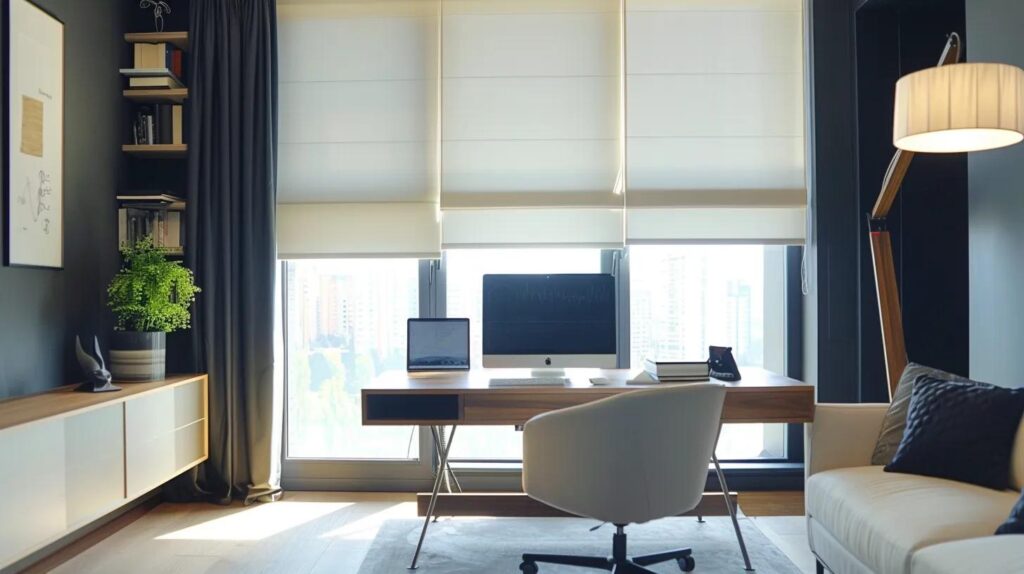
Comparison table: match blind type to office/TV glare needs
Use this table to choose a blind style that fits your room’s usage instead of chasing a one-size-fits-all answer.
| Blind type | Best for | Why it helps with glare | Watch-outs to consider |
| Faux wood blinds (horizontal slats) | Home offices, living rooms, many TV rooms | Precise tilt control; easy day-to-day maintenance | Can feel heavier on very large/tall windows |
| Wood blinds (horizontal slats) | Offices or TV rooms where you want a premium look | Strong tilt control; warm, natural finish | Best kept in lower-humidity rooms; gentler care |
| Vertical blinds | Wide windows, sliding doors, east/west exposure patterns | Side-to-side operation; good for large spans; adjustable vanes | Needs a plan for stack direction and daily walkway |
| Aluminum mini blinds | Simple, lightweight glare control | Direct tilt control; low visual bulk | Can show fingerprints/spots more easily |
Soft next step: if you want a recommendation based on your exact windows (direction, size, and how you use the room), start with the main blinds options here.
Quick checklist: choose glare-control blinds for office and TV rooms
- Identify when glare is worst (morning vs afternoon vs all day)
- Decide whether your top problem is direct sun or reflections/overall brightness
- Choose a blind type with tilt control so you can redirect light instead of blocking it
- If the opening is very wide or a sliding door, consider a side-to-side solution (often vertical)
- Think about daily behavior: do you tilt often, or do you mostly raise/lower?
- Prioritize a finish you’ll actually maintain in a high-use room
CDC/NIOSH guidance for working from home notes that positioning a display perpendicular to windows and adjusting blinds can help reduce screen glare.
What does this look like in real rooms?
Mini-scenario 1: Home office with late-afternoon glare on the monitor
A homeowner works near an east/west-facing window and notices glare spikes late in the day. Instead of closing the blinds completely, they switch to a setup with reliable tilt control so they can redirect light upward and keep the room bright. Their “win” is staying productive without turning the office into a dark cave.
Mini-scenario 2: TV room with a bright window opposite the screen
A family’s TV reflects a bright window across the room. They choose blinds that let them tilt slats to break reflections during daytime viewing, then close more fully at night. The result is a calmer picture without needing the room to be dark all day.
What are the common mistakes that keep glare problems from improving?
- Choosing a solution that only works when fully closed: You’ll stop using it because the room feels too dark.
- Ignoring window direction and timing: Morning vs afternoon glare often points to east/west exposure.
- Placing screens directly in line with the window: Even great blinds struggle if the screen faces the window head-on.
- Over-focusing on “blackout” for daytime glare: For offices and most TV rooms, tilt control + coverage often works better.
- Not considering wide openings: Sliding doors and very wide windows often need a different operating style.
FAQs
Do blinds really help with glare, or do I need shades?
Blinds can be very effective for glare because slats let you adjust and redirect light. The key is choosing a style with comfortable tilt control that you’ll actually use daily.
Should I choose vertical or horizontal blinds for an office?
It depends on window direction, width, and how you use the space. Vertical blinds can work well on wide openings and some east/west situations; horizontal slat blinds are a versatile choice for many standard windows.
What’s the simplest first step if I’m not ready to replace blinds yet?
Try repositioning the screen so it’s not facing a window directly, and use tilt adjustments to redirect light upward. If that helps but you still fight glare daily, it’s a sign your current blinds aren’t giving you enough control.
Next step
If you want blinds that reduce glare while keeping rooms bright—and you want help selecting the best option for your home office or TV room—start here and visit at Better Blind Plus.