
Bathrooms are tough on window blinds. Steam, splashes, and frequent temperature swings can shorten the life of the wrong material, and privacy needs are usually higher than in any other room. This guide helps you choose blinds that handle humidity well while still giving you the light control and look you want.
If you’re comparing options across multiple rooms and want help selecting the right blinds for each space, start with the main blinds options here.
What should “bathroom-friendly blinds” be able to handle?
Bathroom-friendly blinds should resist moisture, clean easily, and still provide reliable privacy. In real terms, that means choosing materials that won’t easily swell, warp, or stain when the room gets steamy.
You’ll also want a surface that tolerates regular wipe-downs, because bathroom blinds tend to collect dust plus fine residue from humidity.
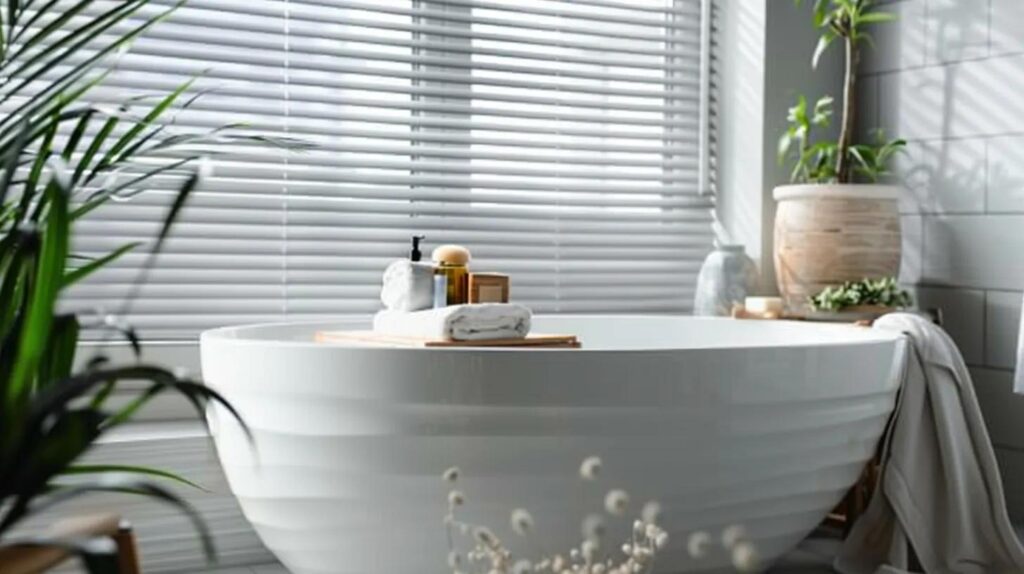
Which blind materials perform best in humidity?
If humidity is your #1 concern, non-porous materials usually perform best because they don’t absorb moisture the way natural fibers can. For many bathrooms, that points you toward faux wood, vinyl, or aluminum.
Real wood can be a beautiful choice in the right rooms, but bathrooms are typically one of the hardest places for it long-term.
Are faux wood blinds good for bathrooms?
In most bathrooms, faux wood blinds are one of the most practical “looks-like-wood” choices because they’re designed to handle moisture better than real wood. They also tend to be easy to wipe down, which is helpful around sinks and tubs.
If you want the warm, slatted look without worrying as much about steam, faux wood is often the first option to consider.
When do vinyl or aluminum blinds make more sense?
Vinyl and aluminum blinds can be a smart fit when you want a simpler, minimal look or when the window is small and you just need dependable privacy and wipeable surfaces.
Aluminum can feel especially light and easy to operate, while vinyl can be a straightforward, budget-conscious style choice (without getting into price ranges).
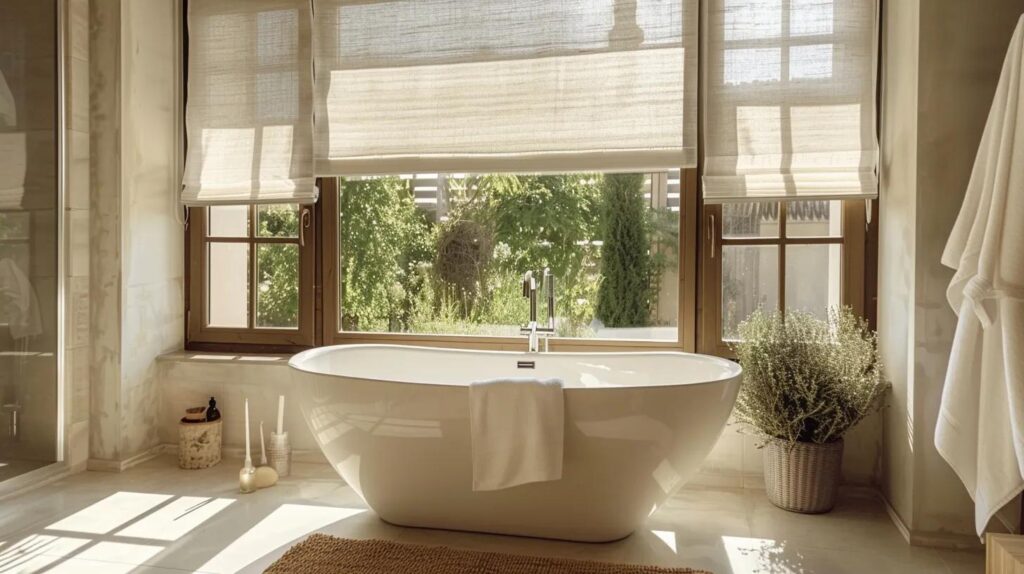
Decision table: which bathroom blinds match your situation?
Use this table to match your bathroom window and habits to the blind type that typically fits best.
| Bathroom situation | Faux wood blinds | Vinyl blinds | Aluminum mini blinds | Vertical blinds (PVC) |
| Frequent hot showers (lots of steam) | Often a strong fit | Often a strong fit | Often a strong fit | Works for very wide openings |
| Window near sink/tub (splash risk) | Easy wipe-down helps | Easy wipe-down helps | Wipeable, but slats can show spots | Not common in bathrooms unless wide |
| You want a “wood look” | Best match | Limited wood-look options | Not wood-look | Not wood-look |
| You want the lightest feel for daily lifting | Can be heavier than some options | Usually light | Usually light | Slides instead of lifting |
| Very wide bathroom window | Works, but plan size/operation thoughtfully | Can work depending on size | Can work depending on size | Often best suited for wide spans |
| You want minimal visual texture | Clean but still slatted | Simple slat look | Sleek, simple slat look | More noticeable stack to one side |
What privacy and light control should you prioritize in a bathroom?
For most bathrooms, the best balance is strong privacy with adjustable daylight, so you can let light in without feeling exposed. Blinds make this easier because you can tilt slats to aim light upward while limiting direct sightlines.
If your bathroom faces a close neighbor or a busy street, consider an outside mount to increase coverage around the edges (and reduce side gaps), especially on smaller windows.
Quick checklist: how to choose blinds for your bathroom
- Pick a moisture-tolerant material (faux wood, vinyl, or aluminum are common choices)
- Think about splash zones (near sink/tub usually needs easy wipe-down)
- Decide what matters more: wood-look warmth or the simplest wipeable surface
- Confirm the window has any clearance you need for tilt/lift controls
- Choose a mount that supports coverage if privacy is critical (outside mount can help)
- Plan for ventilation habits so blinds dry out faster after showers
Good moisture control helps reduce mold risk in bathrooms—EPA guidance emphasizes controlling moisture and using ventilation like bathroom fans or open windows.
What does this choice look like in real homes?
Mini-scenario 1: Small powder room that faces the sidewalk
A homeowner wants privacy but doesn’t want the room to feel dark. They choose a wipeable blind material and tilt the slats upward during the day to keep the room bright while blocking direct views. Because the window is small and close to eye level outside, they also favor an outside mount for better edge coverage.
Mini-scenario 2: Kids’ bathroom with constant splashes
A family notices the window area gets splashed during bath time and wiped down often. They choose a material that tolerates regular cleaning and avoid anything that needs delicate care. Their “win” isn’t just durability—it’s not having to baby the blinds every week.
Common mistakes and red flags to watch for
- Choosing real wood blinds for a steamy bathroom and expecting them to behave like a dry-room install
- Picking a material that’s hard to wipe down near a sink or tub (you’ll feel it quickly)
- Ignoring window hardware or handles that can interfere with operation
- Expecting perfect edge blackout from blinds alone (coverage depends on mount and fit)
- Skipping ventilation habits—if the room stays humid, most materials will age faster
EPA’s quick reminder: the key to mold control is moisture control, including using exhaust fans and drying damp areas promptly.
When should you get a second opinion on bathroom blinds?
If your bathroom window is unusually wide, sits directly in a splash zone, or the opening is uneven, a quick consult can save you from choosing a style that looks good on day one but becomes annoying to maintain. It’s also helpful when you’re trying to keep a consistent look across bedrooms and bathrooms without forcing the same material everywhere.
When you’re ready to match the right bathroom-friendly option to your windows, Visit Better Blind Plus for more details.